Fear
An ancient protective system struggling to meet the demands of a modern world.
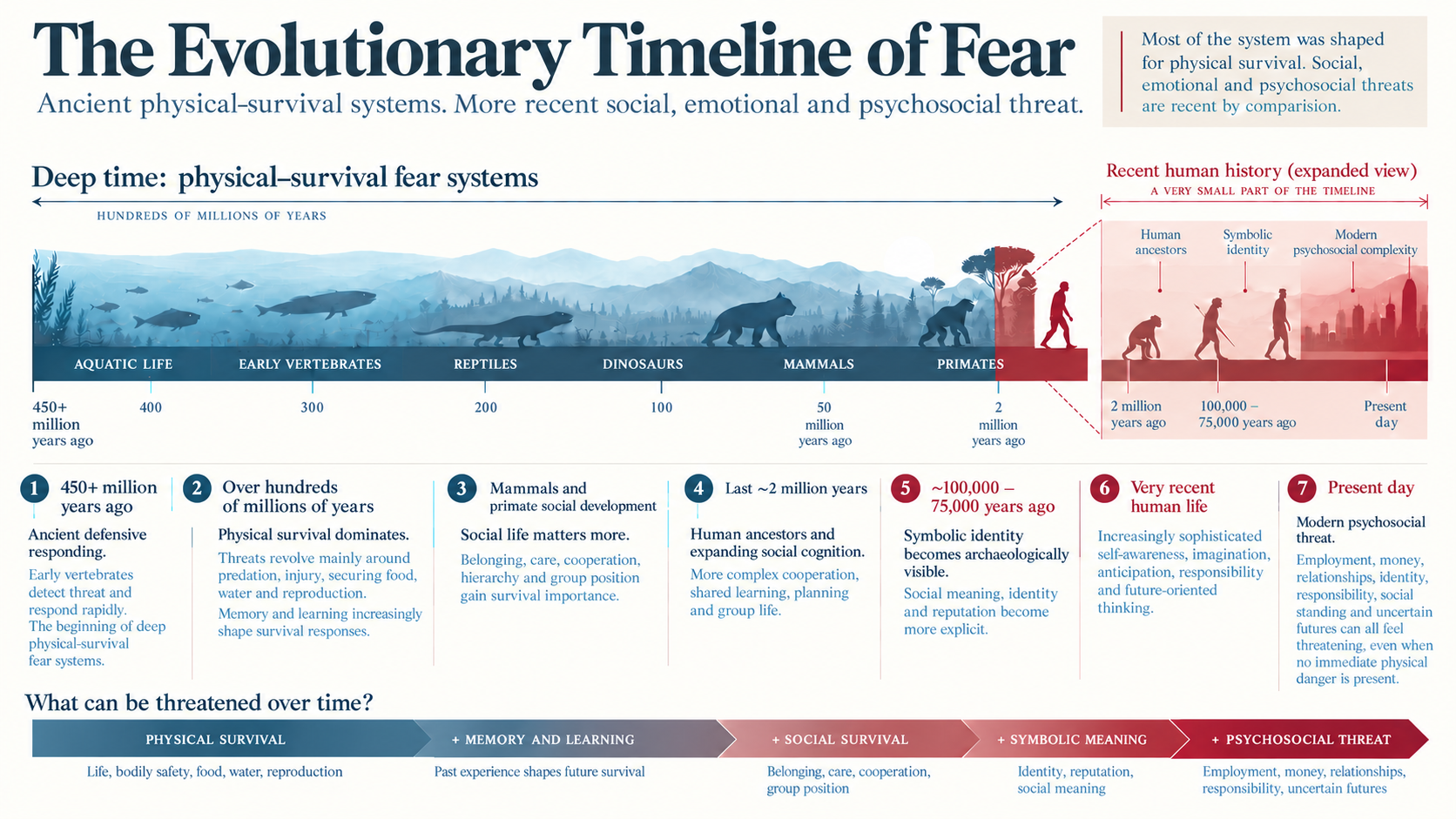
Fear-related defensive responses shaped life on Earth long before human beings existed. More than 450 million years ago, ancient animals were already detecting danger and avoiding predators. Long before our ancestors walked upright. Long before grass grew beneath their feet.
Throughout evolution, these responses helped living organisms survive. As memory, social relationships and human self-awareness developed, our capacity to recognise possible threats expanded beyond physical danger to include belonging, relationships, identity and emotional security.
Today, that ancient protective system responds to modern concerns involving employment, money, relationships, responsibility and uncertain futures. Fear does more than make us feel frightened. It influences how we think, the decisions we make and the consequences of our actions.
To understand fear properly, we need to look beyond the feeling and recognise what it is doing within our behaviour.
What Fear Really Is
Fear is not a fault in human nature or something we would be better off without. It belongs to an ancient protective inheritance that helps us detect and respond to threats that could cause physical, social or emotional harm.
When something appears threatening, our brain and body can begin preparing us to respond before we have consciously understood what is happening. Attention shifts, physical readiness increases and we become more alert to danger.
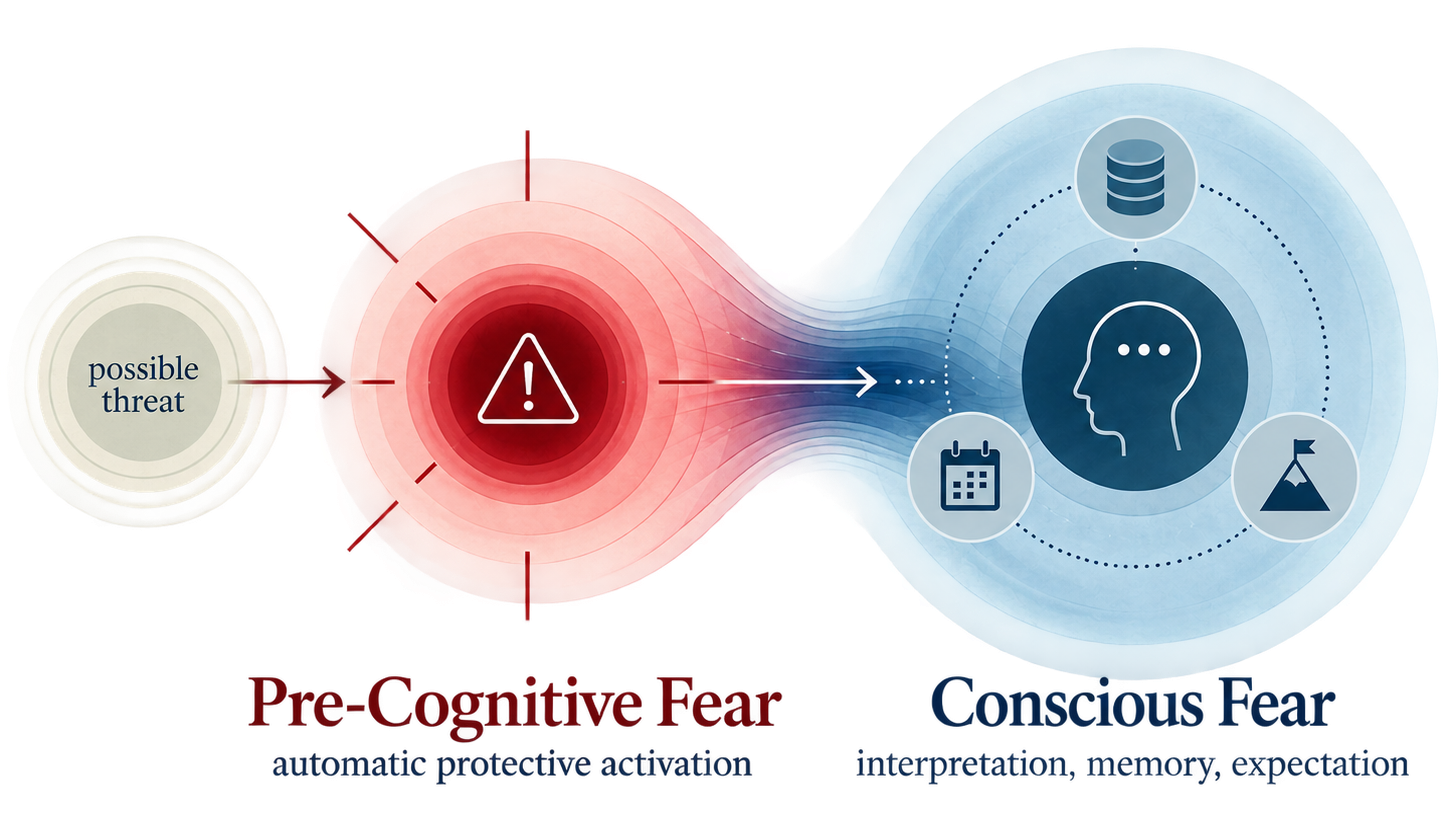
Within STOP Fearing Fear®, this early automatic activation is called Pre-Cognitive Fear. It describes protective responses that can begin before deliberate thought, rather than the conscious feeling of being frightened.
Conscious Fear is the feeling of being frightened. It is shaped by how we interpret a situation, drawing upon previous experience, what we expect or suspect may happen, and the harm we anticipate. This interpretation develops rapidly, sometimes before we fully recognise what we are responding to.
The distinction matters. Our automatic protective response alerts us to possible danger, but it does not determine the best action. Conscious interpretation helps us understand the threat, although memories, assumptions, expectations and thoughts we repeatedly rehearse can all influence that understanding, including imagined outcomes that have never occurred.
When something makes us feel threatened, it can start affecting how we think before we've even worked out what's happening. Our attention can narrow, old experiences and familiar worries come to mind, and we may begin expecting things to go wrong.
The trouble is, what we think is happening isn't always what is actually happening. Fear can influence our interpretation before we've made a decision or done anything about the situation. That's why learning to recognise what fear is doing to our thinking matters. It gives us a chance to question our first interpretation instead of automatically acting on it.
Fear alerts us to something requiring attention. Understanding what it means and deciding how to respond is another matter.
Different Lives. The Same Underlying System
Different lives expose people to different threats. A parent protecting a child, somebody facing redundancy and a person living within a coercive relationship have different circumstances, resources and choices available to them. Their responses and the consequences may be very different.
Yet we share an underlying human mechanism for recognising possible threats, drawing on experience and organising protective responses. Fear can influence behaviour during an immediate crisis or through uncertainty and pressure that build gradually.
Recognising that shared mechanism does not diminish individual circumstances. It helps explain why fear influences such different lives.
An Ancient System in a Modern World
The origins of defensive behaviour reach back hundreds of millions of years. Early animals survived by recognising danger, avoiding harm, securing food and water, and reproducing. Even Homo erectus, one of our early human relatives, emerged only around two million years ago.
As memory and social behaviour developed, cooperation, relationships and position within groups became increasingly important. Social awareness existed long before humanity. Later, human self-awareness, symbolic thought and social identity expanded the range of things we could perceive as threatened.
Our ability to imagine, anticipate and plan made remarkable things possible. It also gave us far more to fear.
We can anticipate losing our home before receiving an eviction notice, fear redundancy before a decision is made, or spend months worrying about debts and relationships that cannot simply be abandoned.
Our sympathetic nervous system can prepare us for physical action even when the situation demands conversation, planning or negotiation. We can find ourselves physiologically prepared for battle when what we actually need to do is negotiate a psychosocial threat.
The protective response is not necessarily wrong. But it may not prepare us for the action needed to resolve the problem.
Evolution cannot redesign our biology to meet every new social and emotional demand within a few generations. We must make better use of the abilities we already possess, particularly our capacity to recognise our own thinking and behaviour while events unfold.
Fear Inside Behaviour
We often recognise fear when someone looks frightened, withdraws or says they are worried. But fear can influence behaviour without being obvious.
Consider a manager responsible for a business under serious financial pressure. Employees depend on it, and the consequences of failure could be substantial.
Fear might encourage careful preparation, honest conversations and decisive action. It might also produce hesitation, excessive control, defensiveness or avoidance. Each response affects employees, relationships and the business.
But the process does not end with the outcome. Successful decisions may strengthen confidence. Unsuccessful ones can influence future expectations. Avoidance that brings immediate relief can become easier to repeat. Even failures repeatedly imagined through worry may shape what the manager expects next time.
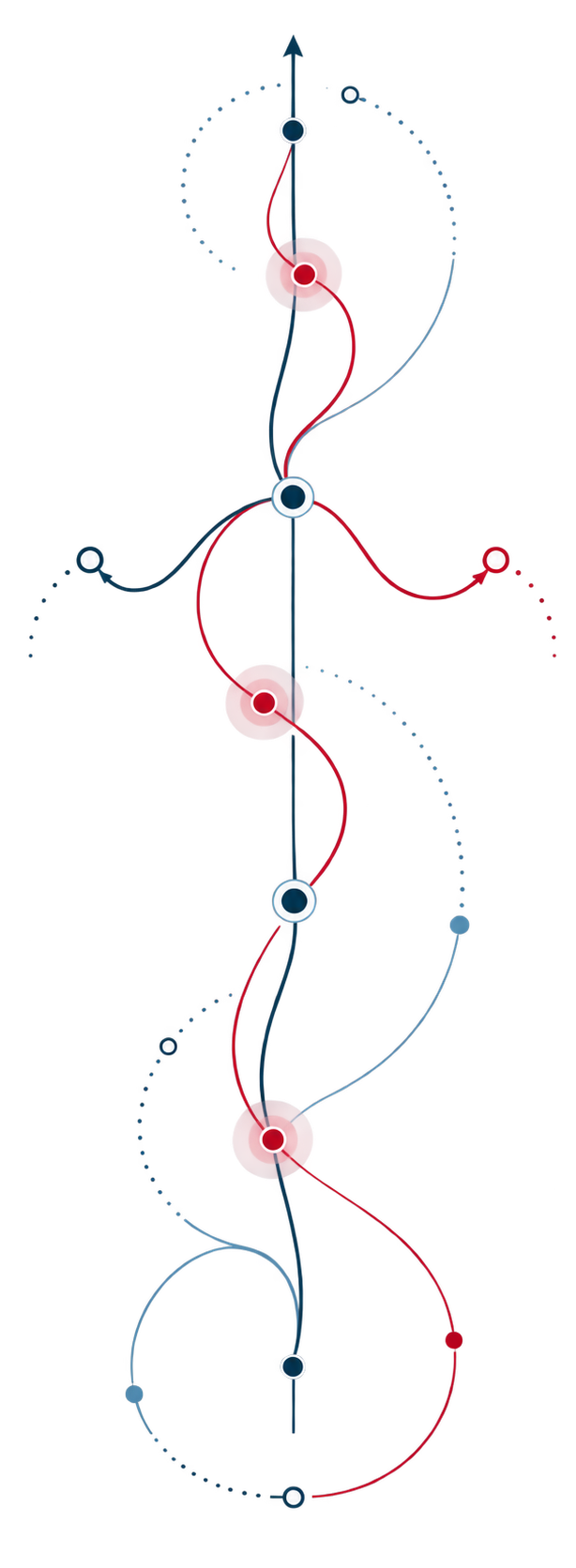
This is why feedback matters within the Behaviour Cycle. Actions produce outcomes. Those outcomes provide information that influences memory, expectations and future interpretation. Feelings, interpretation and previous experience influence which actions we take. Fear can affect every part of that process.
Recognising these influences gives us an opportunity to intervene before another response produces another outcome.
The aim is not to stop fear from occurring. It is to become more capable of deciding what happens next.
Threat, Harm and Fear
When people say what they are frightened of, it helps to ask what they believe could actually happen.

Consider somebody facing redundancy after many years of employment. Their income pays the mortgage and supports their family. Their role also provides routine, relationships, independence and a sense of purpose. With limited savings and an uncertain employment market, they could lose far more than their job.
They may fear losing their home, failing to meet responsibilities, the effect on their family, or losing the stability and identity they have built.
The possibility of redundancy is the immediate threat. The harm they anticipate reaches into several areas of life.
Two people facing the same redundancy process may anticipate very different consequences because their responsibilities, resources and previous experiences differ.
Harm is not limited to injury or material loss. Reputation, dignity, belonging, emotional security and autonomy can also be threatened.
This is the relationship between Threat, Harm and Fear. Something appears threatening because of the harm it might cause. Anticipated harm gives the situation its personal significance and helps explain the fear it produces.
Within STOP Fearing Fear®, Threat → Harm → Fear helps us examine that relationship. It does not mean we consciously calculate every consequence before our automatic protective response begins. That response may already be active.
Memory and expectation then influence how we interpret the situation. We may assess danger accurately, exaggerate it or underestimate a genuine threat.
Understanding what is threatened and what harm is possible helps us examine our response more accurately. Recognising a threat and responding effectively to it are different things.
When Fear Does Not Resolve
People can continue functioning while carrying difficulties that have never been properly resolved. In crisis work, this pattern is especially clear.

Someone may be struggling financially, experiencing conflict at home and facing increasing work demands. They still get up and meet their responsibilities. But the financial problems remain, the relationship deteriorates and work pressure grows.
Some difficulties are genuinely hard to change. Others repeat because our response provides temporary relief without resolving the problem.
This is where Looping and Stacking becomes important. A poorly resolved Behaviour Cycle can loop. Someone avoids a difficult conversation, gains immediate relief and leaves the disagreement unresolved. When the issue returns, frustration and uncertainty have grown, making further avoidance more tempting. The response has become part of the difficulty it was intended to escape.
Other unresolved threats and their consequences can stack together, competing for attention and reducing opportunities to recover.
An animal escaping an immediate predator might return to feeding or resting once the danger has passed. Modern social and emotional threats often have no such clear ending. Financial insecurity continues after work. Relationship problems remain overnight. Tomorrow's responsibilities can occupy our thoughts while we are trying to recover from today's demands. We may be physically safe while still anticipating serious harm.
Acute stress can settle when circumstances improve and recovery is possible. But persistent threats, repeated Behaviour Cycles and inadequate recovery can contribute to chronic stress.
Within the framework, this can happen through Escalation, as difficulties and consequences progressively build, or Overload, when demands exceed the capacity available to respond.
Prolonged stress can contribute to overwhelm, exhaustion and deteriorating functioning. This progression is not inevitable, and recovery remains possible. But it helps explain why someone who once managed substantial pressure may begin struggling with previously manageable demands. They are responding not only to the present challenge, but also to the consequences of what remains unresolved.
What Unresolved Fear Does
Unresolved threats and sustained fear can affect far more than the original difficulty.

Repeated protective activation, persistent worry and inadequate recovery can affect sleep, concentration, physical health, emotional responses and decision-making. Thinking may become less flexible, while actions become increasingly defensive, avoidant or impulsive.
Someone who spends the working day managing threats to their livelihood or responsibilities may return home with little capacity left for family demands. The circumstances have changed, but the pressure remains.
As demands accumulate, people may become overwhelmed. Sometimes this is expressed through an intense reaction commonly described as a meltdown.
A meltdown can involve a temporary loss of the person's usual capacity to regulate their response, expressed through intense distress, agitation, shouting, crying or withdrawal. The underlying processes vary between individuals; it is not simply stored physical energy being released.
What appears to be a sudden or disproportionate reaction to one event may reflect substantial pressure already present.
The consequences can then create additional threats: damaged relationships, embarrassment, workplace difficulties, guilt or fear of recurrence. Those experiences influence memory, expectations and later responses.
Sustained occupational pressure can contribute to burnout. Prolonged adversity may also be associated with other forms of serious deterioration requiring appropriate professional support. These are distinct outcomes, not interchangeable diagnoses or inevitable stages.
The central concern is what can happen when unresolved threats, repeated fear-driven responses and accumulating consequences continue influencing behaviour without sufficient resolution or recovery.
Fear Does Not Have One Form
We often describe fear according to what appears to frighten us: failure, rejection, conflict, abandonment, responsibility, uncertainty or losing control. But those labels rarely explain everything that matters.
Someone afraid of confrontation may actually be anticipating aggression, humiliation or the loss of an important relationship. Someone afraid of professional failure may fear losing their home, disappointing their family or being unable to fulfil their responsibilities.
Even fear of change may have more to do with what somebody believes they could lose than with change itself.
These fears differ in their circumstances and consequences, but they can involve overlapping protective mechanisms.
Rather than treating every named fear as an entirely separate problem, it can be more useful to examine what is threatened, what harm is anticipated and what the person is doing in response.
Relief Is Not Resolution
When we're frightened or under pressure, wanting the discomfort to stop is understandable. Rest, reassurance, support and emotional regulation can help us recover enough clarity to consider what needs to happen. But feeling better does not mean the underlying difficulty has been resolved.

Consider somebody facing serious financial problems. They know they need to examine their accounts, contact creditors and make difficult decisions. Looking at the figures brings what could happen into focus. So they put it off.
For a while, the fear reduces. But bills keep arriving, charges may increase, deadlines pass and opportunities to negotiate narrow. The problem they feared confronting may become worse. Now there is more reason to be afraid.
Avoidance provides immediate relief, making the same response tempting next time while the consequences accumulate. Similar patterns can develop in relationships, professional responsibilities, health concerns and difficult decisions.
Not every problem can be resolved through individual action. Sometimes the safest response is to withdraw, obtain protection or seek help. Taking time or finding support can make it possible to address the difficulty.
Repeatedly escaping the feeling while leaving the difficulty untouched is different. One supports resolution. The other can allow the difficulty to grow.
Fear Can Be Hijacked
Fear can protect us, but it can also make us more susceptible to influence.

Warning somebody about possible harm can change what they pay attention to and what they are prepared to do. When the danger is genuine, that can help people take necessary precautions. But fear can also be exaggerated, manipulated or deliberately encouraged to direct behaviour.
A controlling partner may threaten abandonment. A manager may use insecurity to discourage disagreement. Commercial messages may exaggerate risks to make products or services appear essential.
When somebody is already carrying substantial pressure, another alarming message can be harder to examine clearly.
Not every warning should be distrusted. But the information, possible harm and action being encouraged deserve examination.
Is the threat genuine? Is the warning proportionate? What choices are actually available? Who benefits from the response being encouraged?
Understanding fear includes recognising when somebody else is attempting to direct it.
What Fear Really Is: Bringing It Together
We began by describing fear as an ancient protective system. Its influence on decisions, relationships and unresolved difficulties gives that description more meaning.
A possible threat can activate protective responses before we consciously understand it. Memory, experience and expectation shape our interpretation. That interpretation influences feelings and actions; actions produce outcomes, and outcomes provide feedback for future responses. This is fear within the Behaviour Cycle.
Fear itself is not the problem. It is a protective signal. The problem is what happens when we respond poorly to that signal, leave threats unresolved and repeat behaviours that allow the consequences to grow.
Those consequences feed into later responses. Difficulties can loop, pressures stack, and an attempt to protect ourselves may contribute to what we were trying to avoid.
Not every threat can be removed or managed through individual action. Real danger, unfair conditions and serious adversity may require protection, practical assistance or wider change.
Understanding fear helps us recognise what is happening within our behaviour. We can question an interpretation, notice how past experience is influencing it, and intervene earlier, ourselves or with support, before consequences become harder to manage. That is the thinking behind STOP Fearing Fear®.
Fear is a signal. What happens next matters.
The STOP Fearing Fear® Framework builds on this understanding, bringing behaviour, fear and resilience together to develop the capability for earlier intervention.
Understand the response. Explore the Framework.
Evidence and Further Reading
The explanation of fear on this page draws upon research into defensive survival systems, conscious fear, threat perception, learning, memory, avoidance, stress physiology and human behaviour.
Relevant research includes:
- LeDoux, J. E. & Pine, D. S. (2016). Using Neuroscience to Help Understand Fear and Anxiety: A Two-System Framework.
- McEwen, B. S. (1998). Protective and Damaging Effects of Stress Mediators.
- Arnsten, A. F. T. (2009). Stress Signalling Pathways That Impair Prefrontal Cortex Structure and Function.
- Craske, M. G. et al. (2014). Maximizing Exposure Therapy: An Inhibitory Learning Approach.
- Tannenbaum, M. B. et al. (2015). Appealing to Fear: A Meta-Analysis of Fear Appeal Effectiveness and Theories.
- World Health Organization (2019). Burn-out an Occupational Phenomenon: International Classification of Diseases.
The studies above inform the scientific foundations of this explanation of fear. STOP Fearing Fear® combines relevant psychological and behavioural knowledge with practice-developed educational methods. The Behaviour Cycle, Metacognitive Resilience Formula and MetaSTOP Method® organise that understanding into practical ways of recognising fear, examining responses, taking deliberate action and learning through outcomes and feedback.